On the D-Day:
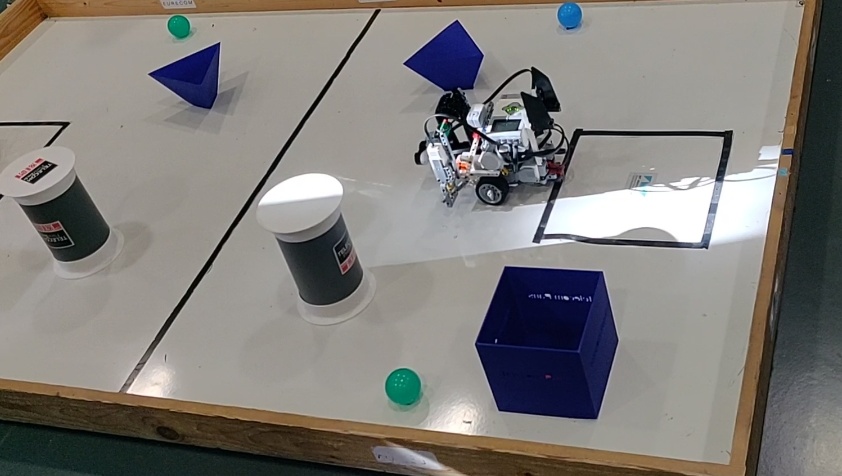
The robot which did good in the tests earlier succumbed to ambitious implementation in the final round. The gyro and motor technical issues did further damage and Sharingan didn’t fare well in the competition. Though we were able to successfully identify few shapes, navigation still remained a major backlog. The detailed analysis of each function is provided in the git repository link to which can be found here.
We can summarize the performance with the following analysis points:
- The robot physical design was almost flawless and we could build the robot with using only 2 sensors instead of 4 offered. The kicker (differential steering mechanism) was an unique take at meeting the objective.
- The ultrasonic was fit in a flexible position to identify objects of varying heights by moving chain up and chain down. Apart from this, the when the object was detected, the ultrasonic would turn either sides to confirm the shape of the objects.
- The main issue, however was incorporating a complex navigation system that, when got combined with the above functionalities, crippled them. The function to navigate around the arena did not work as expected due to some coding challenges and hence the robot did not meet desired expectations. We tried writing multiple functions in this regard, both individually and as groups but given the time and the complexity that we had brought on ourselves, it still remains a challenge.
- Overall, it was an issue of bringing all the written functions together into threads and parallelly running their combinations. We had all the individual tasks right, but combining them was where we erred.
- In the end, we believe we did learn from our failures, no matter the results, and there was great enthusiasm shown by the team for the competition and those hours of coding and putting on thinking caps was really helpful in understanding Operating Systems!
 SHARINGAN